
The Hidden Cost of Event Chaos: How to Simplify Your Booth Setup and Why It Matters in 2026
Jennifer Rizzi
May 14, 2026
From trade shows to road shows and recruiting fairs, B2B brands are investing heavily in in-person experiences again. But behind every polished booth is a reality most event marketers know too well: event prep is often chaotic, fragmented, and far more operationally complex than it should be.
Today’s event teams aren’t just planning experiences anymore. They’re acting as logistics coordinators, warehouse managers, creative directors, and shipping troubleshooters—all while trying to drive pipeline and brand visibility.
And in 2026, that model is starting to break.
Event Booth Challenges Have Become an Operations Problem
For years, companies treated event booths as one-off projects. Need signage? Find a vendor. Shipping? Coordinate it manually. Stuck without storage between events? Figure it out later.
That approach may work for a single annual conference. It doesn’t scale for organizations running dozens—or even hundreds—of events per year.
Now, event teams are facing a new set of operational challenges:
- Managing booth assets across multiple regions and teams
- Tracking delivery timelines and return logistics
- Storing booth displays between activations
- Reducing setup complexity for lean, on-site teams
The result? Event managers spend enormous amounts of time solving logistical problems instead of focusing on attendee engagement and revenue impact.
Why “Good Enough” Booth Experiences No Longer Work
Event attendees have changed.
In crowded expo halls filled with competing brands, generic booths blend into the background. Companies are under increasing pressure to create experiences that are:
- Immediately recognizable
- Social media-friendly and photo-ready
- Consistent across every location
But many teams are still stitching booths together from disconnected vendors and last-minute shipments. That means the brands standing out in 2026 aren’t necessarily spending the most –they’re building repeatable event systems.
Why Booth Logistics Are Often the Biggest Bottleneck
Ask almost any event marketer what causes the most stress before a conference, and the answer usually isn’t creative strategy. It’s logistical questions like:
- Did the booth backdrop arrive?
- Who has tracking information?
- Where are the display materials stored after the event?
- Who is responsible for returns?
- Will the team on-site know how to assemble everything?
These operational gaps create hidden costs, and as event calendars grow more aggressively, the inefficiencies compound.
The Rise of “Booth in a Box”
To address these challenges, more companies are looking for packaged event solutions that combine booth assets, storage, and fulfillment into a single streamlined system.
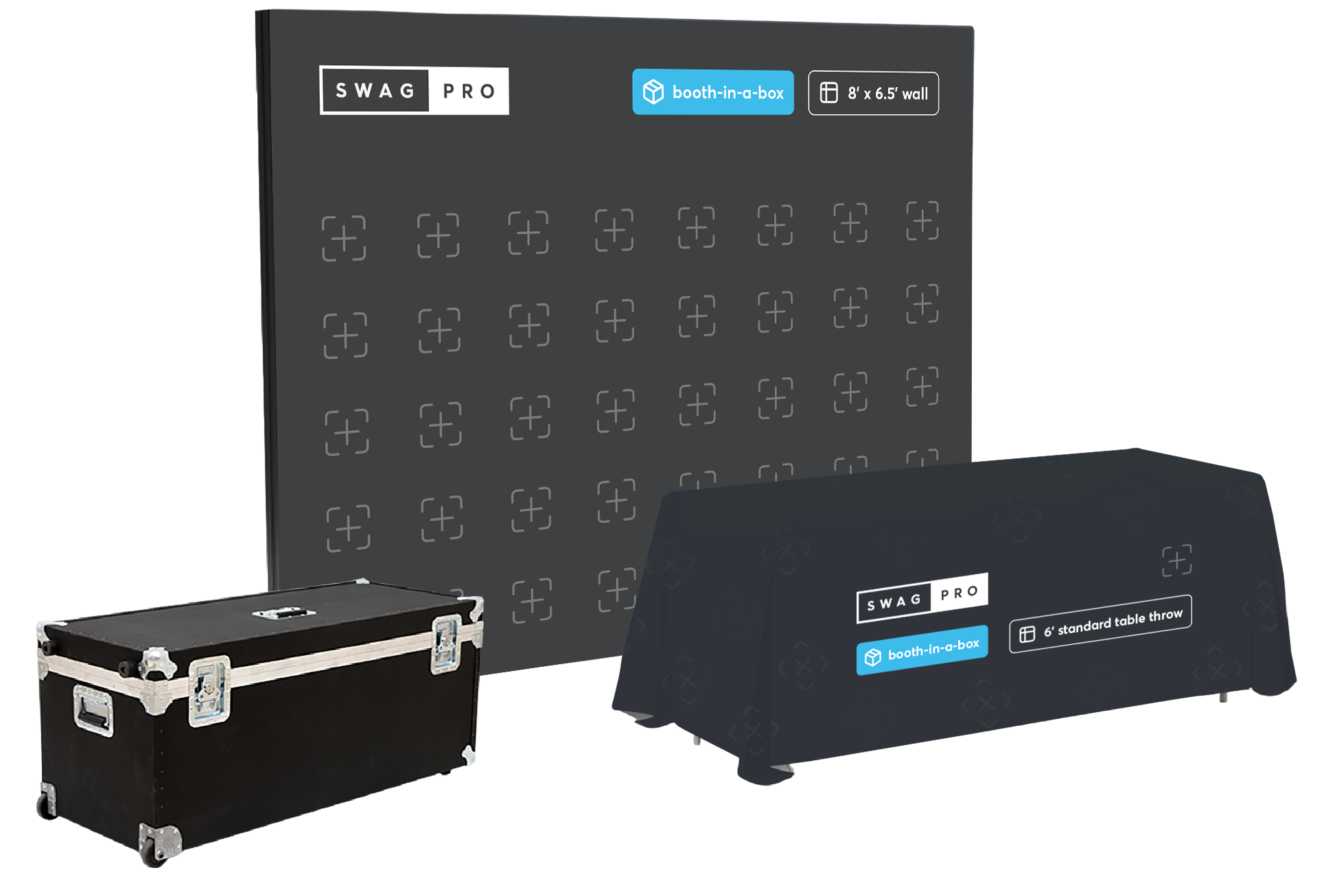
That’s the idea behind Booth in a Box from Swag Pro.
Rather than sourcing booth materials from multiple vendors and managing every shipment manually, Booth in a Box provides a centralized solution for event displays and logistics.
Each package includes:
- Branded booth backdrops
- Table drapes
- Counter options
- Direct shipping to and from event locations
- Warehouse storage between events
- White-glove cleaning and repacking services
Instead of rebuilding your event presence every time, teams can deploy a ready-to-go booth experience that arrives prepared for activation and returns to storage after the event.
For companies running distributed event programs, having that operational consistency becomes more and more necessary.
What Scalable Event Programs Have in Common
High-performing event teams in 2026 tend to share a few common traits:
Centralized Vendor Management
Instead of coordinating multiple fulfillment vendors, and shipping providers, they consolidate event operations wherever possible.
Consistency and Repeatability
Successful teams build reusable booth systems that can scale across regions and teams without reinventing processes.
Reduced On-Site Complexity
The easier a booth is to ship, assemble, and return, the smoother the event execution becomes.
The Future of Event Marketing Is Operationally Efficient
As budgets tighten and expectations rise, event teams are being asked to do more with fewer resources. That means efficiency is becoming a competitive advantage.
The companies that scale event programs successfully in 2026 aren’t the ones scrambling to coordinate booth materials days before a conference. They’re the ones building repeatable systems that simplify execution from the start.
Because the goal of an event booth isn’t managing logistics. It’s creating meaningful conversations, memorable experiences, and stronger in-person connections. Everything else should feel effortless.
Want to explore Booth in a Box options for your team? Let’s chat.
